
This guide walks through how I installed and configured Proxmox VE on a Dell Inspiron system. The setup is designed for a homelab environment where I can experiment with virtual machines, VLANs, and internal routing.
Hardware Overview
- Server: Dell Inspiron running Proxmox VE on bare metal
- Storage: about 100 GB allocated to the Proxmox system disk; remaining space reserved for VM disks (local-lvm)
- Network: one physical Ethernet interface, bridged in Proxmox to support LAN access and trunking
I only allocated 100 GB to the Proxmox root disk during install. You can grow storage later by adding a new disk or creating additional LVM/thin pools.
1) Proxmox Startup and Install
Right after booting from the Proxmox VE installer USB, you’ll see the startup/installer menu. Place this near the beginning of your read:
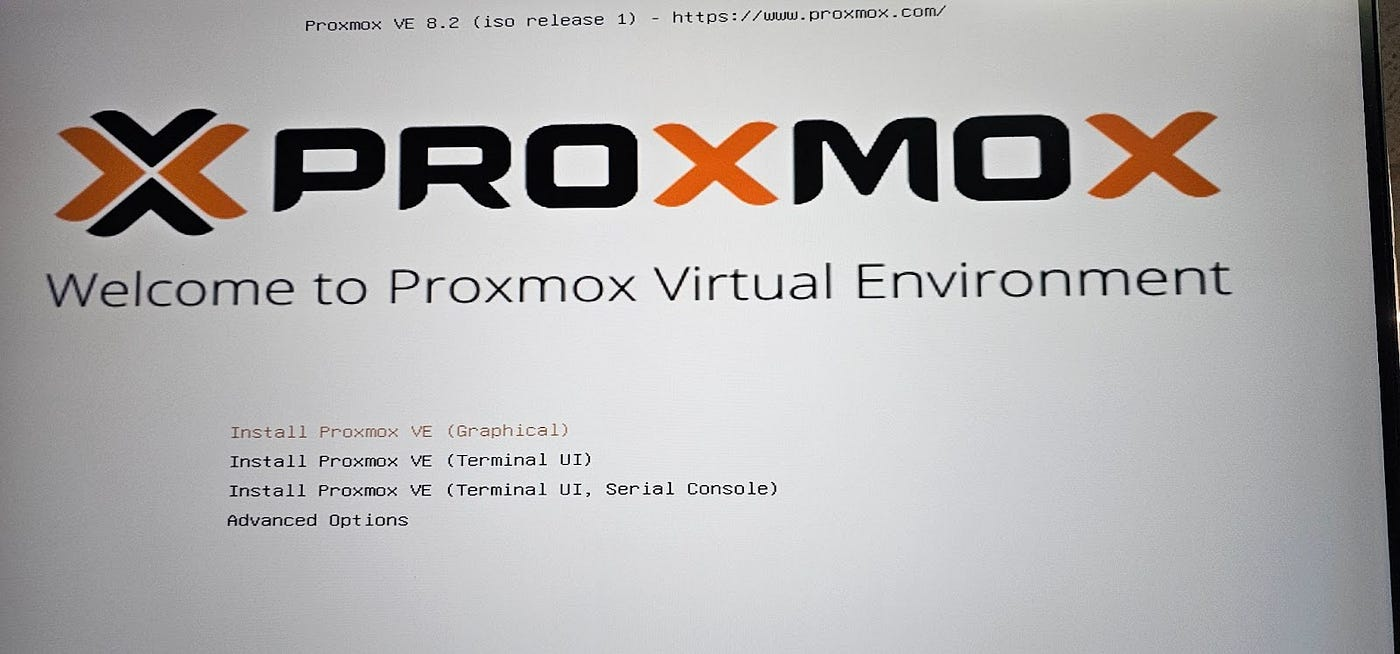
I downloaded the latest Proxmox VE ISO and flashed it to a USB drive, booted the Dell Inspiron, and installed Proxmox to the internal disk. During setup I selected a small system disk size (~100 GB) for the Proxmox root volume.
Key install choices I used:
- Filesystem: ext4 or ZFS (I used the default ext4 for simplicity)
- Country/Time/Keyboard: set to your locale
- Management password: set a strong password for the
rootuser - Management network: static IP 192.168.12.130/24 with gateway 192.168.12.1
2) Networking Setup (Manual Configuration)
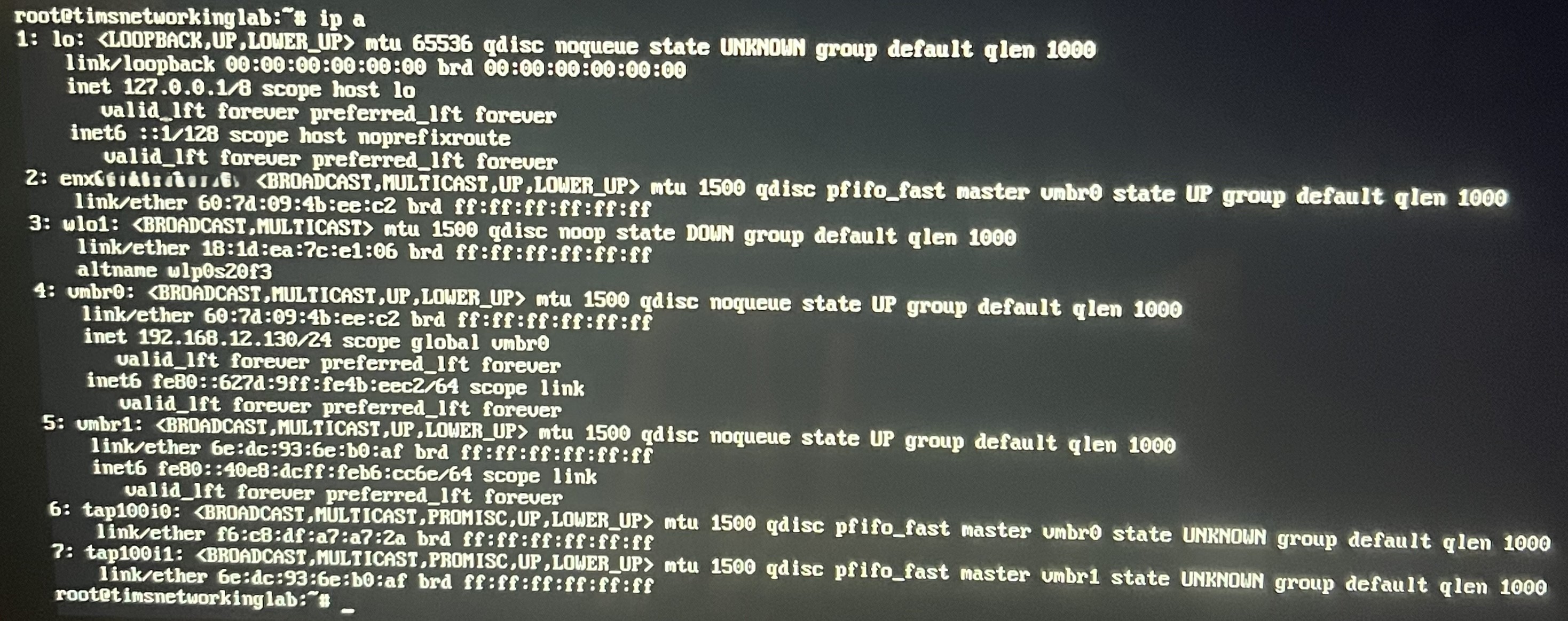
Proxmox didn’t recognize my LAN Ethernet interface automatically, so before I could access the web GUI, I had to manually configure the networking:P
First, I ran ip a to identify my NIC and current interface state:
Then I edited /etc/network/interfaces to set up the correct bridge and static IP for management:
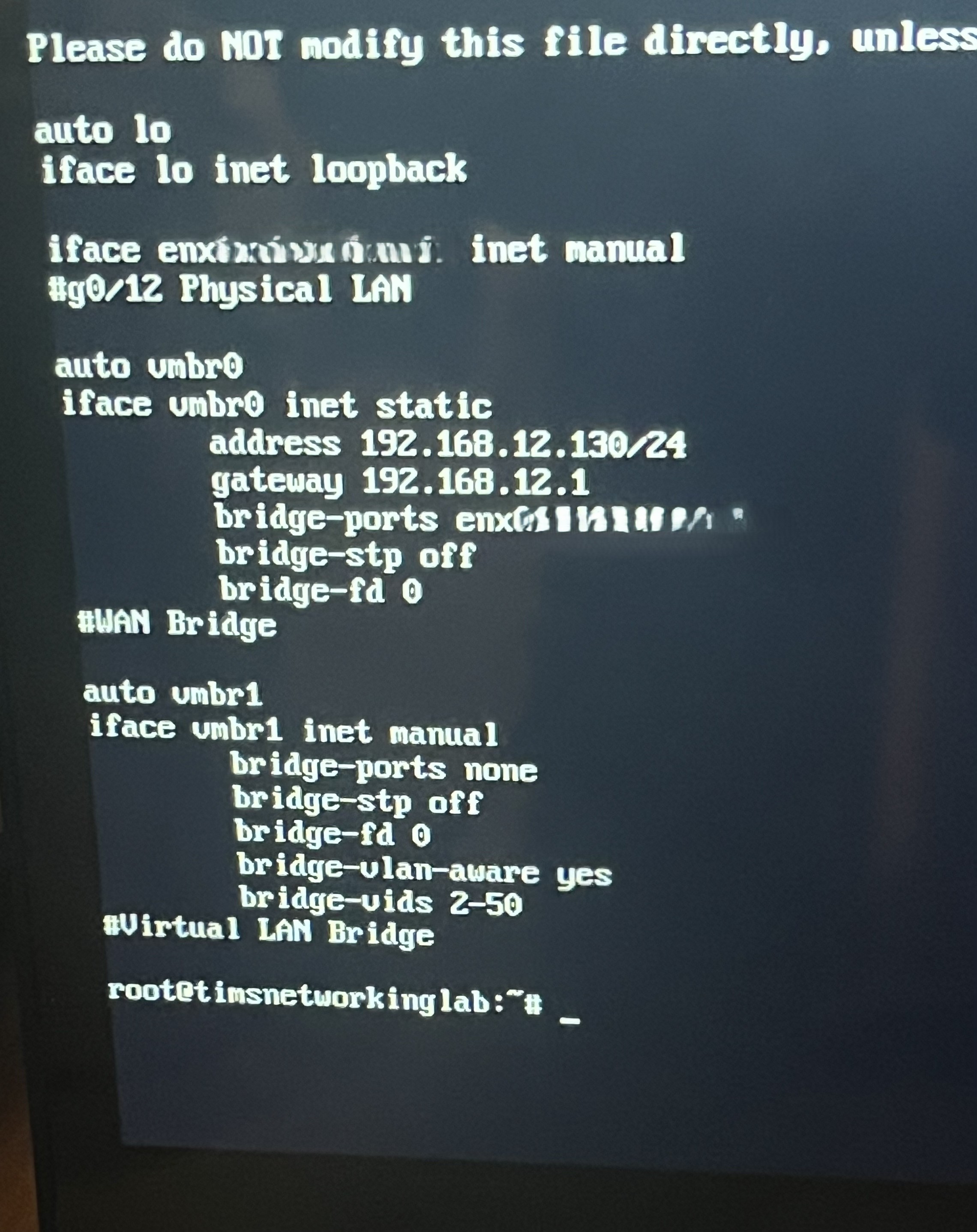 Network interface blurred.
For reference, here’s the config in text form so you can copy/paste:
# /etc/network/interfaces (Proxmox VE)

auto lo
iface lo inet loopback

iface <YOUR-NIC-NAME> inet manual
    # Physical LAN

auto vmbr0
iface vmbr0 inet static
    address 192.168.12.130/24
    gateway 192.168.12.1
    bridge-ports <YOUR-NIC-NAME>
    bridge-stp off
    bridge-fd 0

# Optional VLAN trunk bridge for lab networks
auto vmbr1
iface vmbr1 inet manual
    bridge-ports none
    bridge-stp off
    bridge-fd 0
    bridge-vlan-aware yes
    bridge-vids 2-50
Replace <YOUR-NIC-NAME> with your actual NIC (for example, enx123456789abc). If you prefer the GUI, you can make the same changes in Datacenter → Node → System → Network.
After saving and restarting networking, I confirmed routing was correct within my LAN. Only then was I able to access the Proxmox web interface from my Windows 11 computer (192.168.12.104, same subnet).
3) First Login and Summary
After reboot, I could log into the web interface at:
https://192.168.12.130:8006
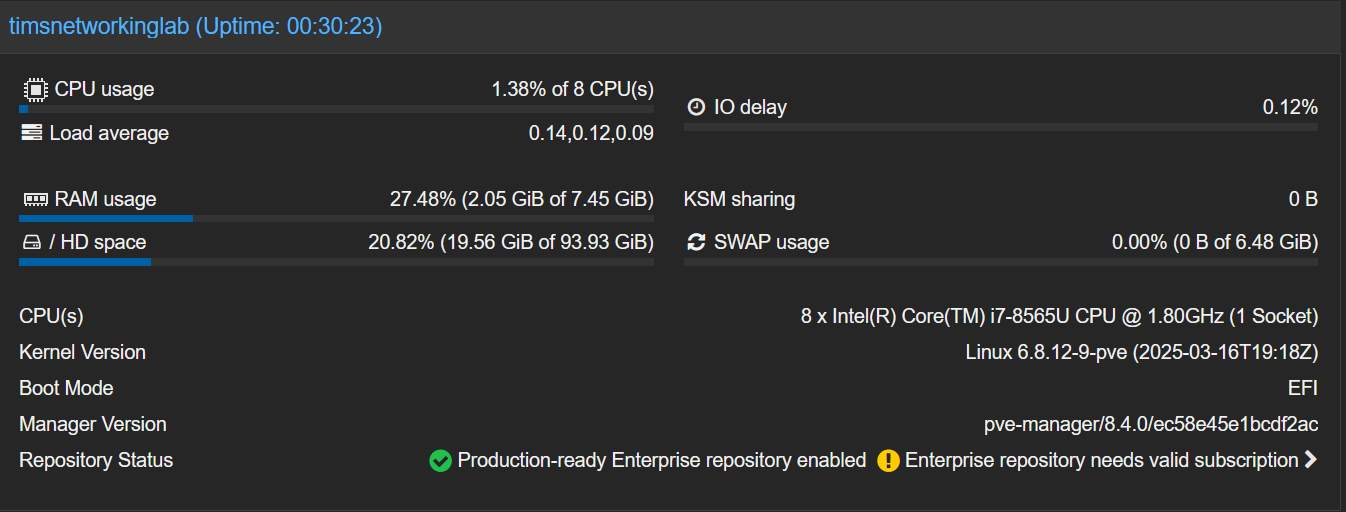
Once the node came online, the Proxmox Summary page showed system resources and the repo status warning (normal without a subscription):
5) Post-Install QOL Tweaks
- Switch to the no-subscription repository (optional) to clear the enterprise repo warning.
- Update packages and reboot when needed.
- Set timezone and NTP under Datacenter → Node → System → Time.
6) What’s Next
With Proxmox installed, you can now:
- Create VLAN-tagged networks for lab isolation
- Spin up pfSense as a router/firewall VM
- Deploy VMs for apps like Nextcloud, monitoring, or dev tools
This Proxmox base is the foundation for the rest of my homelab series.